

About Insulinomas
What is an insulinoma?
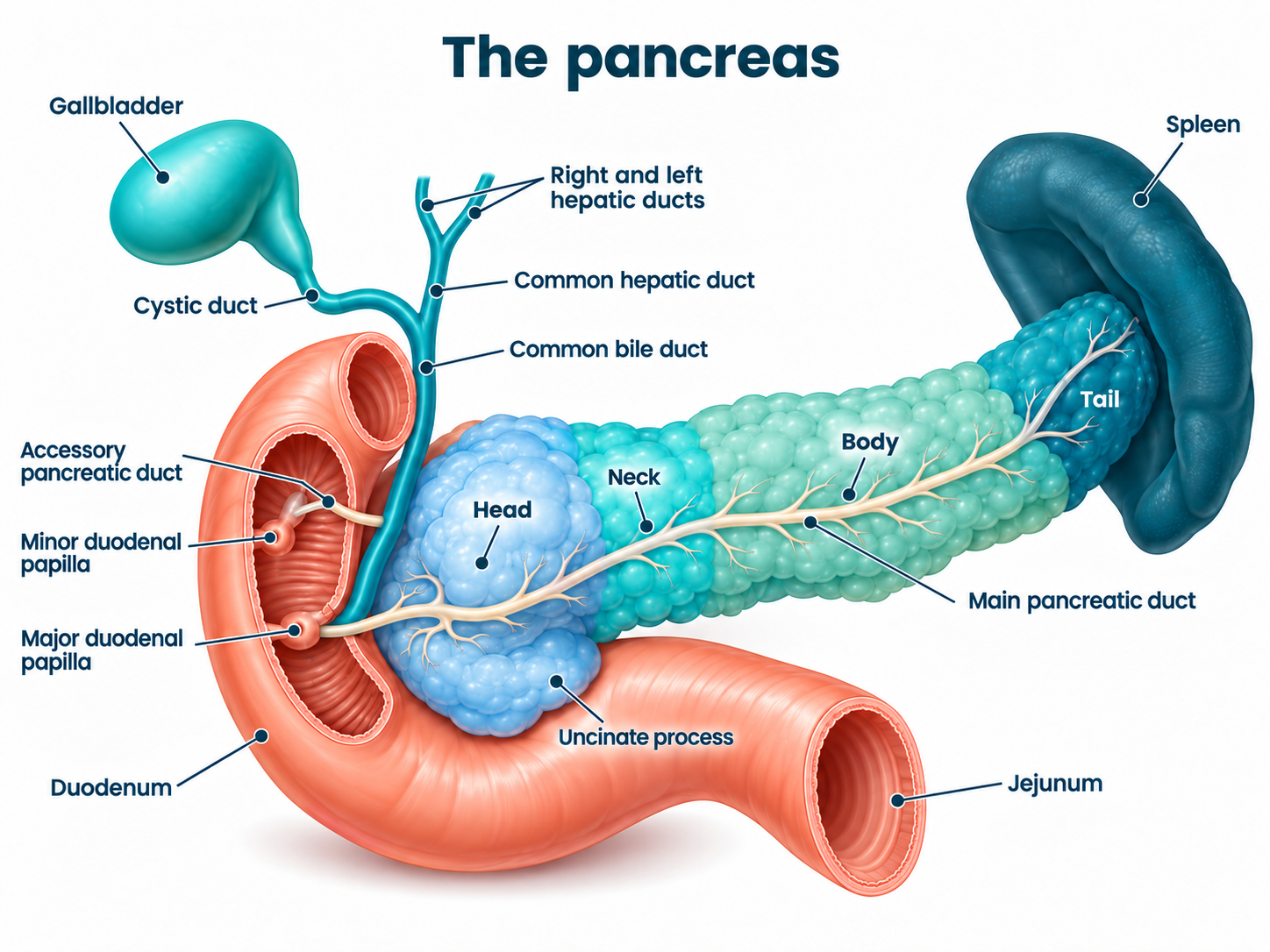
An insulinoma is a rare neuroendocrine tumour of the pancreas. It releases insulin when blood glucose is already low, causing hypoglycaemia. It is called a functioning tumour because its hormone release causes symptoms.
Symptoms
Sweating, hunger, weakness, a racing heart and confusion can occur. Severe episodes may cause seizures or unconsciousness. Symptoms often develop during fasting or overnight, but can follow meals.
Diagnosis
Blood tests during hypoglycaemia assess glucose, insulin and C-peptide together. Scans then help locate the tumour. Symptoms or glucose monitor readings alone cannot confirm an insulinoma.
Inherited conditions
Some insulinomas are linked to inherited conditions, particularly multiple endocrine neoplasia type 1 (MEN1). Personal and family history helps determine whether genetic counselling is needed.
Treatment
Surgery is preferred for a localised insulinoma. Disease that has spread requires an individual treatment plan.
Full reference
Hofland J, Falconi M, Christ E, et al. European Neuroendocrine Tumor Society 2023 guidance paper for functioning pancreatic neuroendocrine tumour syndromes. Journal of Neuroendocrinology. 2023;35(8):e13318.
https://doi.org/10.1111/jne.13318
Based on ENETS 2023, particularly Questions 1, 4, 5, 6 and 8. Updated 27 September 2026.
